Quick Answer
IV therapy delivers vitamins, minerals, and other nutrients directly into the bloodstream, bypassing the gut for 100% absorption. It’s used for fatigue, dehydration, immune support, migraines, chronic illness, and anti-aging protocols. When administered by qualified clinical staff with a proper health intake, it’s safe, effective, and noticeably faster-acting than oral supplements. It’s not for everyone, but for the right person and the right condition, the difference is real.
IV therapy used to be something you only encountered in a hospital. Now it’s offered at wellness clinics, med spas, and even mobile services that come to your hotel room. That shift has brought more access and more noise. Some of the marketing around IV drips is overblown. Some of the scepticism is equally overblown.
The truth sits in the middle. IV therapy has a legitimate clinical basis, a solid safety record when done properly, and a real difference-maker status for specific conditions. It’s also not magic, and it’s not for everyone. This guide gives you the honest version benefits, risks, what the different drips do, and how to decide if it makes sense for you.
How Does IV Therapy Actually Work?
When you take a supplement orally, it has to survive your stomach acid, get processed by your intestines, and then be absorbed into the bloodstream, losing a significant percentage at each step. Magnesium absorption through the gut, for example, typically ranges from 20 to 50% depending on the form and your gut health. Vitamin C maxes out at around 200 to 400mg in plasma before the gut saturates.
IV therapy skips all of that. The nutrients go directly into your vein and reach your bloodstream and tissues at concentrations that simply aren’t achievable through oral intake. That’s the core reason IV therapy produces effects that supplementation often doesn’t, not because the nutrients are different, but because the delivery method changes what your body actually receives.
Oral vs. IV The Simple Version
Oral supplements maintain background nutrient levels. IV therapy achieves therapeutic plasma concentrations measurably higher, clinically meaningful, and faster-acting. Both have their place. They’re not the same thing, and one doesn’t replace the other entirely.
Types of IV Therapy: What Each One Is For
Not all IV drips are the same formula. Here’s a straightforward breakdown of the most common options and who they’re suited for:
| IV Drip Type | Best For | Session Time |
|---|---|---|
| Hydration / Saline | Dehydration, altitude fatigue, travel recovery | 30–45 min |
| Myers’ Cocktail | Fatigue, migraines, immune support, fibromyalgia | 30–45 min |
| NAD+ | Brain fog, cellular aging, addiction recovery | 2–4 hours |
| Glutathione | Detox, inflammation, skin health, liver support | 30–60 min |
| Vitamin C (high dose) | Immune defence, post-illness recovery | 45–60 min |
| B12 / B-Complex | Low energy, nerve support, metabolism | 20–30 min |
| NAD+ + Glutathione | Combined anti-aging and detox protocol | 2–5 hours |
The right drip depends entirely on your health situation and goals. A brief intake conversation with a clinician, not a menu, is the right starting point.
The Real Benefits of IV Therapy
The benefits of IV therapy are real, but they’re specific, not universal. Here’s where the evidence is strongest:
Rapid Rehydration
This is the most straightforward benefit and the one with the clearest clinical evidence. IV fluids rehydrate faster and more completely than drinking water, particularly after intense exercise, illness, travel, or exposure to heat and altitude. For hikers and visitors in Sedona, where the elevation and dry climate accelerate dehydration, this alone makes IV hydration worth considering.
Nutrient Deficiency Correction
Many people have subclinical nutrient deficiencies that don’t show up as dramatic symptoms but contribute to fatigue, brain fog, poor immunity, and slow recovery. B12 deficiency is extremely common, especially in people over 50 or following plant-based diets. Magnesium deficiency is linked to migraines, muscle cramps, and poor sleep. IV therapy corrects these deficiencies faster and more completely than oral supplementation in the same situation.
Immune Support
High-dose intravenous Vitamin C reaches plasma concentrations that demonstrate measurable immunological activity, enhancing white blood cell function and reducing illness duration. It’s a popular choice around illness season, after periods of high stress, and during post-illness recovery when the immune system is rebuilding.
Energy, Cognition, and Anti-Aging
NAD+ IV therapy works at the cellular level, restoring mitochondrial function and supporting DNA repair in ways that no oral supplement currently replicates at equivalent concentrations. For people dealing with chronic fatigue, cognitive decline, or pursuing a proactive longevity protocol, NAD+ has a growing and legitimate evidence base behind it.
Chronic Condition Management
IV therapy is used as part of integrative treatment protocols for fibromyalgia, chronic fatigue syndrome, autoimmune conditions, and migraine management. It doesn’t replace conventional treatment, but for many patients, regular infusions reduce symptom burden meaningfully alongside their existing care.
The Risks of IV Therapy: Honestly
IV therapy is safe when administered by qualified clinical staff with a proper health intake. It’s not risk-free, and it’s worth being straight about that.
Risks That Are Real but Manageable
- Bruising or mild discomfort at the insertion site common and temporary
- Vein irritation, particularly with higher concentrations of certain vitamins
- Nausea or flushing during NAD+ infusions, if administered too quickly managed by adjusting the drip rate
- Rare allergic reactions manageable when a nurse is present throughout the session
Risks That Come From Poor Practice
- Wrong dosing – using too much of a mineral like magnesium or potassium can cause serious cardiac effects. This is why a health intake and qualified staff matter.
- Infection at the IV site – a real risk with untrained or careless administration
- Contraindicated treatments – certain conditions (kidney disease, hypercalcemia, specific heart arrhythmias) make certain IV formulas dangerous. A proper intake catches these.
The single most important safety factor
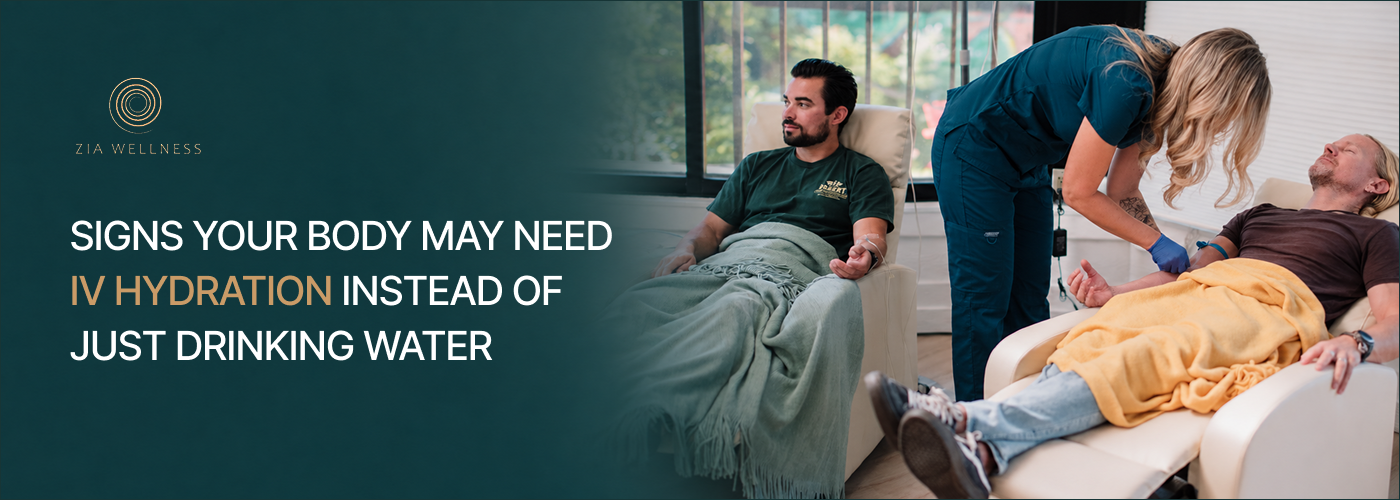
Who administers your IV drip matters more than anything else. At Zia Wellness, every infusion is given by a Registered Nurse. We do a health intake before every first session. We stay present throughout. We adjust if something feels wrong. A wellness brand with no clinical oversight is a different category of product, not a safer version of the same thing.
Who Should Consider IV Therapy?
IV therapy is a good fit if you’re dealing with any of the following:
- Persistent fatigue, low energy, or brain fog that doesn’t improve with rest
- Frequent migraines or chronic headaches
- Dehydration from exercise, travel, illness, or altitude exposure
- A high toxic load alcohol, medications, environmental exposure
- Immune system that feels consistently depleted or slow to recover
- Chronic conditions like fibromyalgia, autoimmune issues, or long-COVID
- Active addiction recovery, particularly NAD+ protocols
- A proactive anti-aging or longevity protocol
Who Should Be Cautious or Avoid It
- People with kidney disease: high doses of magnesium and Vitamin C require healthy renal clearance
- Pregnant or breastfeeding women: consult your OB before any IV treatment
- People with certain heart conditions: discuss with your cardiologist before IV magnesium
- Those with a history of kidney stones: high-dose Vitamin C can increase oxalate load
IV Therapy in Sedona, AZ
Sedona sits at around 4,350 feet above sea level. The altitude, dry air, and outdoor activity that make Sedona extraordinary also dehydrate people faster than they expect. Most visitors underestimate it until they’re headachy and exhausted midway through a trip that was supposed to be restorative.
A Myers’ Cocktail or straight hydration IV can turn that around in under an hour. Many Sedona visitors build it into their trip as a practical wellness reset after hiking, before a long drive home, or simply to feel their best during a short stay.
We also offer mobile IV service throughout Sedona, meaning a Registered Nurse comes to your hotel, vacation rental, or retreat location. Same clinical standard, no travel required on your end.
Frequently Asked Questions
How long does an IV therapy session take?
It depends on the drip. A simple hydration IV or glutathione push takes 30 to 45 minutes. A Myers’ Cocktail runs 30 to 45 minutes. NAD+ takes 2 to 4 hours due to the slow infusion rate required for tolerability. We’ll give you a clear time estimate before you book.
How quickly will I feel the effects?
Hydration effects are often felt within the session itself. B12 and energy drips are typically noticeable within a few hours. NAD+ effects build over 24 to 48 hours. Glutathione and Vitamin C effects accumulate over a series of sessions rather than one single treatment.
How often should I get IV therapy?
For general wellness or hydration, once or twice a month is typical. For chronic fatigue, fibromyalgia, or an active NAD+ protocol, weekly sessions for 4 to 6 weeks followed by monthly maintenance is more common. We build this out with you based on your goals and health history.
Is IV therapy covered by insurance?
In most cases, elective wellness IV therapy is not covered by insurance. Medical IV infusions prescribed for specific conditions (iron infusion, certain medications) may be covered depending on your plan. We recommend checking with your insurer for your specific situation.
Can I get IV therapy if I’m just visiting Sedona?
Yes, and this is one of the most common situations we see. A single session provides real benefit, particularly for rehydration and immune support after travel. If you’re here for a longer stay, two sessions spaced a few days apart often delivers noticeably better results than one.
Is IV Therapy Worth It?
For the right person, dealing with the right issue, administered by the right provider yes, genuinely. IV therapy isn’t a replacement for good nutrition, sleep, and lifestyle habits. It also isn’t a gimmick. It’s a delivery mechanism that works significantly better than oral intake for specific therapeutic goals.
The best starting point isn’t picking a drip from a menu. It’s a five-minute intake conversation with someone who can actually assess what your body needs. That’s what we do at Zia Wellness before every session, and it’s the reason our patients get results rather than just a bag of expensive fluids.