Quick Answer
Persistent fatigue, headaches, dizziness, dark urine, and slow recovery after activity can signal that plain water isn’t restoring your hydration fast enough. IV hydration in Sedona delivers fluids and electrolytes directly into the bloodstream, which may help address these symptoms more directly than drinking water alone, especially at higher elevations. A quick assessment can help determine which approach fits your situation.
Key Takeaways
- Ongoing fatigue, headaches, or dizziness can signal that water alone isn’t keeping up with your hydration needs.
- Sedona’s elevation and dry climate can accelerate fluid loss beyond what people expect.
- Dark urine and dry skin are common, easy-to-miss signs of low hydration.
- IV hydration delivers fluids directly into the bloodstream, bypassing the digestive process.
- Mobile IV therapy is an option for those who’d rather stay home, at a hotel, or at a job site.
- A quick assessment can help determine whether IV hydration or water alone is the better fit.
Why Water Doesn’t Always Solve the Problem
Drinking water is the first thing most people reach for when they feel off, and most of the time, it helps. But water has to be absorbed through the digestive system, which takes time and isn’t always efficient, especially if you’re already significantly dehydrated, dealing with heat or altitude, or your body is struggling to retain fluids.
That’s part of why some people can drink water steadily all day and still feel foggy, tired, or headachy. IV hydration in Sedona works differently, delivering fluids and electrolytes straight into the bloodstream, which may help address symptoms more directly when water alone doesn’t seem to be catching up.
7 Signs You May Need More Than Water
1. Fatigue That Doesn’t Improve After Drinking Water
If you’ve been drinking water consistently and still feel drained, low hydration at the cellular level may be part of the picture. Fatigue that lingers despite normal water intake is one of the more common reasons people look into IV hydration.
2. Frequent Headaches or Brain Fog
Mild dehydration is commonly associated with headaches and difficulty concentrating. If headaches show up on hiking days or after time outdoors in Sedona’s dry air, hydration is often one of the first things worth addressing.
3. Dizziness or Lightheadedness When Standing
Feeling lightheaded when you stand up quickly can be linked to lower blood volume from fluid loss. This is a sign some people notice more at higher elevations, including around Sedona and the surrounding Verde Valley.
4. Dry Mouth, Dry Skin, or Chapped Lips That Won’t Improve
If your skin and lips stay dry no matter how much water or lip balm you use, your body may be losing fluids faster than you’re replacing them. Dry climates make this sign easy to dismiss as normal, even when it isn’t.
5. Dark Yellow Urine Despite Regular Water Intake
Urine color is one of the simpler ways to gauge hydration. If it stays consistently dark yellow even when you feel like you’re drinking enough, your body may need more support than water alone is providing.
6. Muscle Cramps or Slow Recovery After Activity
Electrolytes, not just water, play a major role in muscle function. Cramping or unusually slow recovery after a hike, workout, or day in the sun can point to an electrolyte imbalance rather than simple water loss.
7. Feeling “Off” After Travel, Illness, or Altitude Changes
Flying, recovering from an illness, or adjusting to Sedona’s elevation can all disrupt hydration levels quickly. If you feel noticeably worse than expected after any of these, it’s a common reason people consider IV hydration as a faster way to feel back to normal.
Quick Reference: What Each Sign May Suggest
| Sign | What It May Suggest |
| Ongoing fatigue | Cellular-level hydration isn’t keeping up with water intake |
| Headaches or brain fog | Mild dehydration affecting concentration and comfort |
| Dizziness when standing | Lower fluid volume, more common at higher elevation |
| Dry skin, lips, or mouth | Fluid loss outpacing intake, common in dry climates |
| Dark urine | A simple, visible sign hydration needs may not be met |
| Cramping or slow recovery | Electrolyte imbalance rather than water loss alone |
| Feeling off after travel or altitude change | Rapid hydration shifts from environment or illness |
When IV Hydration May Be Worth Considering
Not every tired or dry day calls for IV hydration; often, water, rest, and electrolytes on their own are enough. IV hydration in Sedona tends to be more relevant when symptoms are persistent, show up after activity or travel, or don’t seem to improve no matter how much water you drink.
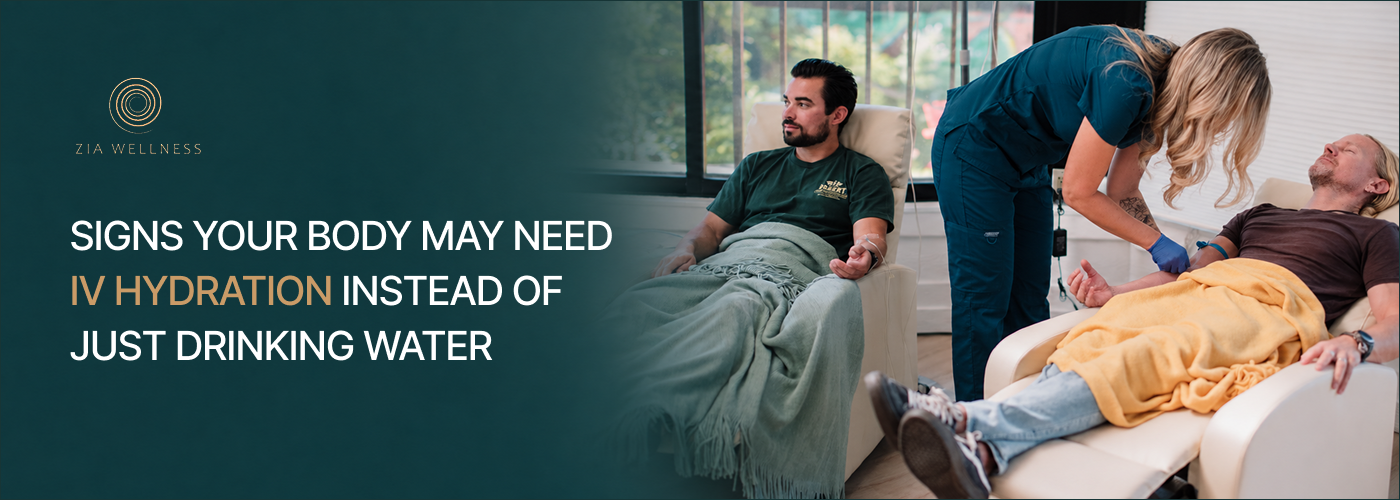
For those who’d rather not travel to an office, mobile IV therapy in Sedona brings the same process to a hotel, home, or job site, which is a common option for both visitors and residents managing a busy schedule.
What to Expect at an IV Hydration Appointment
- Quick health check – your provider asks about symptoms, activity level, and hydration habits.
- Formula selection – a hydration-focused blend, often with electrolytes, is chosen based on your needs.
- Treatment – the IV typically takes 30 to 45 minutes, depending on the formula and volume.
- Aftercare – simple guidance on continued water intake and activity for the rest of the day.
- Follow-up – some individuals return periodically, especially during high heat, travel, or hiking season.
Frequently Asked Questions
How long does it take for IV fluids to rehydrate you?
Many people notice a difference during or shortly after their IV session, since fluids are delivered directly into the bloodstream rather than processed through digestion. Exact timing varies by individual and by how dehydrated you were beforehand.
What is silent dehydration?
Silent dehydration refers to mild fluid loss that doesn’t trigger obvious thirst but still affects energy, focus, and how you feel overall. It’s common in dry climates and at higher elevations, where fluid loss can happen faster than people realize.
What is the fastest way to rehydrate your body?
IV hydration is generally considered one of the faster methods, since it delivers fluids and electrolytes directly into the bloodstream. For milder cases, water combined with electrolytes can also help, though it typically takes longer to take effect.
What drink hydrates you the quickest?
Drinks containing electrolytes, such as those with sodium and potassium, are generally absorbed more effectively than plain water alone. That said, oral hydration still moves through the digestive system, which takes more time than IV hydration.
How do I know if I need IV fluids for dehydration?
Persistent fatigue, headaches, dizziness, dark urine, or dry skin that don’t improve with regular water intake are common signs worth discussing with a provider. A quick assessment can help determine whether IV hydration is an appropriate option for you.
How long after drinking water does it actually hydrate you?
Water is generally absorbed within about 20 to 30 minutes, though full hydration and rebalancing of electrolytes can take longer depending on how dehydrated you were and how quickly your body processes fluids.
Does an IV hydrate you better than drinking water?
IV hydration delivers fluids directly into the bloodstream, bypassing digestion, which some people find helps them feel better more quickly than drinking water alone, especially when dehydration is more significant. For everyday hydration, water is still an important daily habit.
What are the 6 unexpected signs you are not drinking enough water?
Beyond thirst, signs can include headaches, fatigue, dry skin, dizziness when standing, dark urine, and difficulty concentrating. These signs are often overlooked since they don’t always feel directly connected to hydration.
Conclusion
Water is still a foundational part of staying hydrated, but it isn’t always enough on its own, especially in a place like Sedona where elevation and dry air can accelerate fluid loss. Recognizing these seven signs early can help you address low hydration before it affects your energy, focus, or overall wellbeing.
If these signs sound familiar, the Zia Wellness team can help you figure out whether IV hydration fits your situation, in-office or through mobile IV therapy wherever you are in the Sedona area.