Quick Answer
Lower face Botox uses small, precise injections to relax specific muscles around the jaw, mouth, chin, and neck creating a lift and slimming effect without any cutting or recovery time. It’s not a surgical facelift, but for the right candidate it produces a real, visible difference. Common treatments include jaw slimming, lip flip, chin smoothing, marionette line support, and the Nefertiti neck lift. Results last 2 to 6 months depending on the area.
Most people think of Botox as something you put in your forehead. The lower face doesn’t get talked about as much, which is a shame, because that’s where a lot of the subtle changes of aging actually show up first.
The jaw widens. The mouth corners start to turn down. The chin gets a bumpy texture. Bands appear in the neck. None of it is dramatic, but together it can make someone look older or more tired than they feel. The good news is that lower face Botox can address most of these things without surgery, without general anaesthesia, and without a week of recovery.
This guide covers what lower face Botox actually does, which areas it treats, who it’s a good fit for, and what real results look like.
How Does Lower Face Botox Work?
Botox (botulinum toxin type A) temporarily blocks the nerve signal that tells a muscle to contract. When that muscle relaxes, two things happen: the overlying skin stops creasing, and the balance between muscles that pull and muscles that lift shifts slightly in favour of lift.
In the lower face, this matters a lot. Several muscles actively pull the face downward the depressor anguli oris pulls the mouth corners down, the mentalis creates chin texture, the platysma drags the jawline with it as it ages. Relaxing these downward-pulling muscles doesn’t just smooth lines. It allows the structures above them to sit higher and lighter.
That’s the mechanism behind the ‘lifting’ effect people describe with lower face Botox. It’s not magic, it’s muscle balance. And it only works well when the injector understands that anatomy precisely.
Lower Face Botox Treatment Areas at a Glance
| Treatment | What It Does | Duration | Downtime |
|---|---|---|---|
| Lip flip | Upper lip appears fuller, less gummy smile | 2–3 months | No downtime |
| Lip lines | Vertical lines above lip softened | 2–3 months | No downtime |
| Chin dimpling | Pebbled chin texture smoothed | 3–4 months | No downtime |
| Jaw slimming | Slimmer, softer lower face shape | 4–6 months | Mild soreness |
| Marionette support | Corners of mouth less downturned | 3–4 months | No downtime |
| Nefertiti neck lift | Neck bands reduced, jawline lifted | 3–4 months | No downtime |
| Platysmal bands | Vertical neck cords softened | 3–4 months | No downtime |
What Each Lower Face Treatment Actually Does
Jaw Slimming Masseter Botox
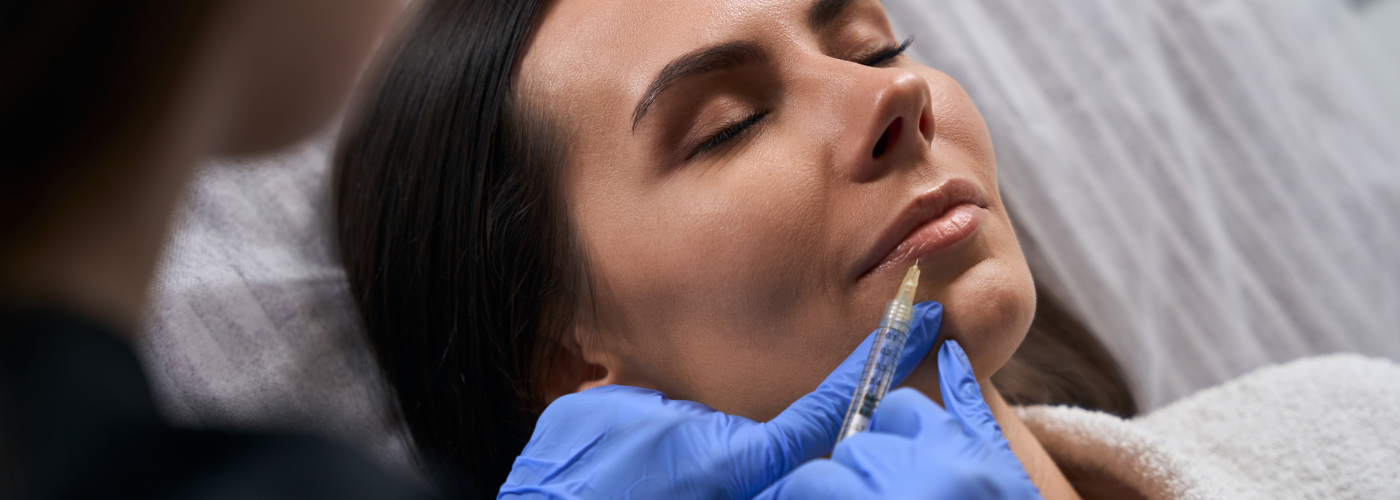
This is one of the most requested lower face treatments and one of the most underappreciated. The masseter is the large muscle at the angle of your jaw that you use for chewing. In some people, it’s naturally large; in others, it gets bigger over time from clenching or grinding teeth (bruxism).
Botox into the masseter causes it to gradually reduce in size over 4 to 6 weeks. The result is a slimmer, softer lower face, less square, more tapered. It’s also genuinely therapeutic for people who grind their teeth or wake up with jaw pain, as it reduces the intensity of the clenching. This area tends to last longer than most, often 4 to 6 months.
Lip Flip
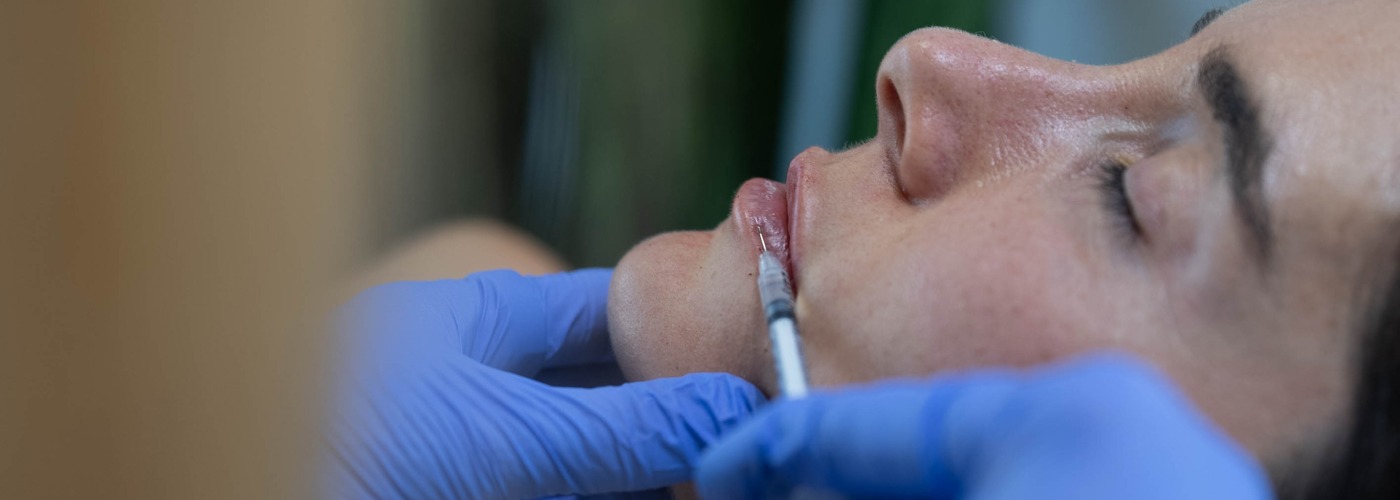
The lip flip uses a very small amount of Botox along the border of the upper lip to relax the muscle slightly, allowing the lip to curl outward rather than tucking under. The result looks like a subtly fuller upper lip without adding any filler volume.
It’s a good fit for people who want a modest enhancement, those who find their upper lip disappears when they smile, or people with a gummy smile (where too much gum shows above the upper teeth). Sessions take about 5 minutes. Results are subtle and take a few days to appear. It wears off faster than other areas, typically 2 to 3 months.
Chin Smoothing
The mentalis muscle sits in the chin and creates that pebbled, orange-peel texture some people notice, especially when speaking or at rest. It’s one of the smaller, quicker treatments, but makes a clean visual difference. A few precise units of Botox smooth the surface and soften the chin’s overall appearance. It’s frequently done alongside lip work as part of a lower face treatment plan.
Mouth Corner Lift Marionette Line Support
The depressor anguli oris (DAO) is the muscle responsible for pulling the corners of the mouth downward. As it strengthens with age or in people who naturally have strong DAO muscles, the corners of the mouth turn down at rest, which can make someone look sad, stern, or older than they are.
Relaxing the DAO with Botox allows the levator muscles that pull the corners upward to do their job without competition. The result is a subtle lift at the mouth corners and a more neutral, rested expression at rest. It’s a small treatment with a genuinely meaningful impact on how approachable and rested someone looks.
Nefertiti Lift Neck and Jawline
Named after the Egyptian queen famous for her long, defined neck and sharp jaw, the Nefertiti lift uses Botox along the lower jawline and into the vertical bands of the platysma muscle in the neck.
As the platysma ages, it develops vertical bands that pull downward on the lower face and neck. Relaxing these bands does two things: it softens the neck cords visually, and it reduces the downward pull on the jawline, creating a mild but real lifting effect along the jaw. It’s one of the more technically demanding lower face treatments and highly dependent on precise placement, but in the right candidate it produces results that are hard to achieve with anything short of surgery.
Who Is Lower Face Botox a Good Fit For?
Lower face Botox works best for people in the early to moderate stages of lower face aging where things are starting to shift but haven’t fully descended. The more helpful markers are:
- You notice your jaw looks wider or more squared than it used to
- The corners of your mouth pull down at rest even when you’re not frowning
- Your chin has developed a bumpy texture that shows up in photos
- You’re clenching or grinding at night and waking with jaw tension
- You want fuller-looking lips without the commitment of filler
- Vertical bands or cords have appeared in your neck
- You want a non-surgical option before considering a facelift
It’s not the right tool for everyone. If volume loss is the primary issue, hollow cheeks, deep nasolabial folds, significant jowling, fillers, or biostimulators like Sculptra will likely do more work than Botox alone. Often, the best lower face results come from combining approaches, and we’ll be direct with you about which is which.
What to Expect Before, During, and After
- Before your appointment: Avoid blood thinners, including ibuprofen, aspirin, and alcohol, for 24 hours before. Come with a clean face. No special prep is needed beyond that.
- During the session: Lower face treatments typically take 20 to 30 minutes, sometimes less. The injections are brief; most people describe it as a small pinch per site. No numbing cream is usually needed, but we offer it if you’d prefer.
- Immediately after: Some small bumps or mild redness at injection sites are normal and clear within an hour or two. Avoid touching or rubbing the treated area for 4 hours. No lying flat for 4 hours. Skip intense exercise for the rest of the day.
- Results timeline: Lip work and chin smoothing start showing within a few days. Jaw slimming takes the longest; you’ll see gradual change over 4 to 6 weeks as the muscle reduces in size. Neck and jawline lifting is usually visible within 2 to 3 weeks.
A Note on Natural Results
The most common concern people bring up before lower face Botox is looking overdone or frozen. The lower face is an expressive area you need to be able to smile, talk, and eat without restriction. A good lower face result should be invisible in the sense that nobody should be able to tell you’ve had anything done. They should just think you look well. That’s the standard we work to at Zia Wellness, and it requires conservative dosing and a proper facial assessment before every treatment.
Lower Face Botox vs. Surgery: What It Can and Can’t Do
This is worth being straight about. Lower face Botox produces real results, but it has limits.
- It can slim and soften the jaw; it can’t restructure bone.
- It can lift the mouth corners and create a mild jawline lift, it can’t correct significant jowling or skin laxity.
- It can soften neck bands, it can’t remove excess skin or fat in the neck.
- It requires repeat treatment every 3 to 6 months to maintain results; it’s not permanent.
For people in their mid-30s to 50s with early to moderate lower face changes, Botox often delivers enough of a result that surgery doesn’t feel urgent or necessary. For more advanced changes, it can still play a role alongside surgical or other non-surgical options. The honest answer about what’s right for you requires looking at your face, not a generic recommendation.
Frequently Asked Questions
1. Does lower face Botox hurt?
Most patients describe it as a quick pinch per injection. The jaw (masseter) area can be slightly more noticeable than the lip or chin because the muscle is denser. If you’re sensitive to needles, a topical numbing cream applied 20 minutes before can make it more comfortable.
2. Can lower face Botox be combined with fillers?
Yes, and this is often the most effective approach. Botox handles dynamic muscle activity; fillers address volume loss and static lines. Treating the lower face with both simultaneously is common and safe when done by an experienced provider who understands how the two products interact.
3. Will jaw Botox change how I chew or talk?
No. The masseter is reduced in size but not paralysed. You will chew, talk, and express yourself completely normally. The change is gradual, and the muscle retains full function; it simply gets smaller with reduced neural stimulation over time.
4. How long does lower face Botox last?
It depends on the area. Lip flip and lip lines: 2 to 3 months. Chin, DAO, and Nefertiti lift: 3 to 4 months. Masseter (jaw slimming): 4 to 6 months. With regular treatment, some people find the results extend slightly as the targeted muscles adapt.
5. Am I a good candidate for lower face Botox?
The best way to answer that is a brief in-person assessment. Lower face anatomy varies significantly between individuals, and what works for one person may not be the priority for another. We look at your specific muscle activity, skin quality, and what you’re hoping to achieve before recommending anything. If something else will serve you better, we’ll say so.
Thinking About Lower Face Botox in Sedona?
The lower face is one of the areas where the difference between a good result and a poor one comes down almost entirely to the skill and judgment of the injector. Too much product in the wrong place affects how you smile, talk, and look, and that’s not a trade-off anyone should be making.
At Zia Wellness, our Nurse Practitioners and Registered Nurses assess every patient individually before treatment. We use conservative dosing, map to your anatomy, and build a treatment plan around what you actually need, not a standard menu item. If lower face Botox makes sense for you, we’ll show you exactly how and why. If something else will serve you better, we’ll tell you that instead.